No blogs have yet been posted from this ecoregion.
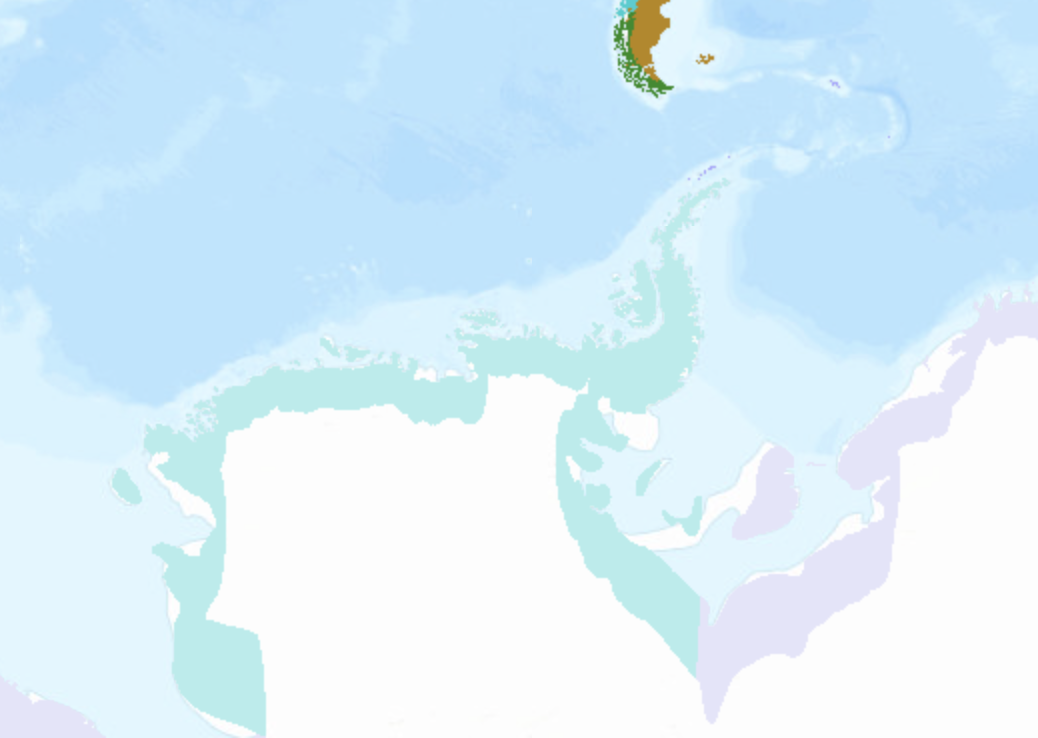
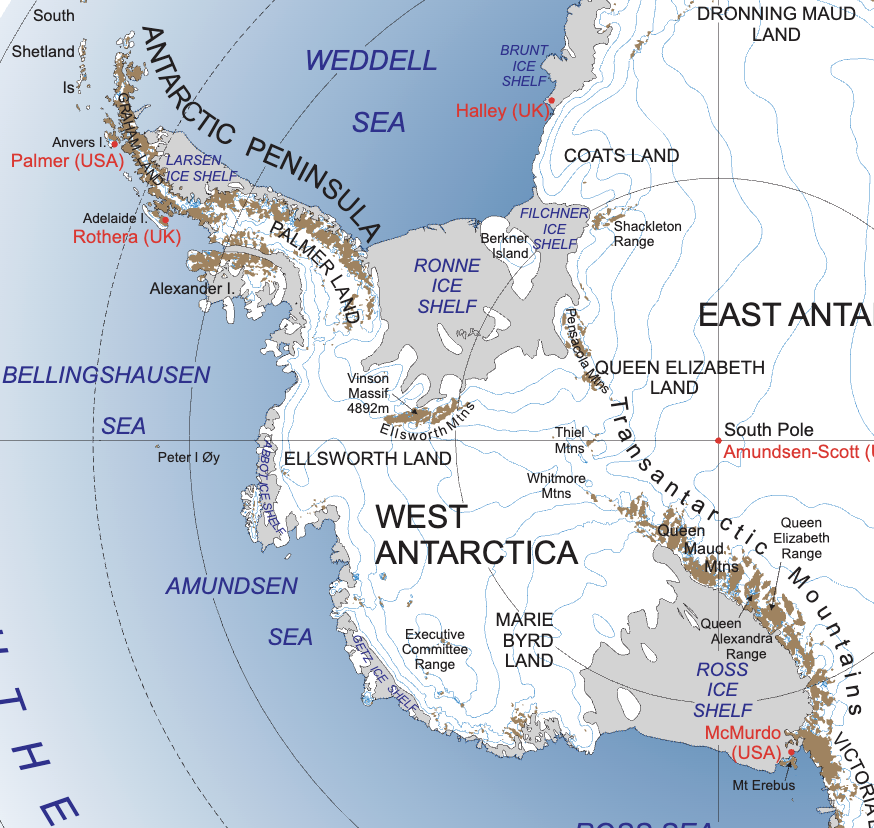
In all of continental Antarctica, there are just two ecoregions, essentially restricted to the coastal strip, as the huge ice-covered area of the interior is not included in any ecoregion. The Marielandia ecoregion is essentially the coastal strip of Western Antarctic and the Antarctic Peninsula. The ecoregion is some 4000 km across. The adjacent mauve coastal strip of Antarctica in the map below is the Maudlandia Antarctic Desert (AN1102). The subantarctic islands fall into two other Antarctic ecoregions. Because the ecoregion map below lacks details, I also provide below an additional map of Western Antarctica.
Description of the Ecoregion
Wikipedia notes: “The parts of West Antarctica not covered with ice, which are the coasts of the Antarctic Peninsula, constitute a biodiversity region known as Marielandia Antarctic tundra (after Marie Byrd Land). This area has the warmest climate in Antarctica; the moss and lichen-covered rocks are free of snow during the summer months, although the weather is still intensely cold and the growing season very short.”
The Antarctic Peninsula was named Graham Land by the British and Palmer Land by the US (and both the Chileans and Argentinians have their own names) and so to resolve the naming dispute, the northern part in known in English as Graham Land with Palmer Land to the south. Graham Land is named after Sir James R. G. Graham, First Lord of the Admiralty, due to his role in helping to fund a voyage of exploration in 1832. He’s of no known relation to me! The peaks and islands that form Graham Land are an extension of the Andes.
There are over a thousand species of fungi that have been identified in Antartica, mostly lichen-forming species. Other than mosses and lichens, there are only two flowering plant species that are native to the Peninsula. The only mammals are seals, sea lions and whales. The flightless midge Belgica antartica is the largest purely terrestrial native animal in Antarctica, reaching 6 mm in size.
Birds of the Ecoregion
Wikipedia notes that there are approximately 40 bird species that breed on or close to Antarctica, including species of petrels, penguins, cormorants, and gulls. Various other bird species visit the ocean around Antarctica, including some that normally reside in the Arctic. The Emperor Penguin is the only penguin that breeds during the winter in Antarctica; it and the Adélie Penguin breed farther south than any other bird species.
Resources for the Ecoregion Birder
A great deal of information is now known about the wildlife of the continent. I have found the following source amazing for birds and mammals:
- Book on wildlife.
DJG: xx spp. (February 18, 2026)